

Marrakech Morocco: The Ultimate Travel Guide (2026)

Marrakech Morocco is unlike any city on earth. A labyrinth of rose-red ramparts, rooftop terraces draped in bougainvillea, souks scented with leather and spice, and a legendary main square — Jamaa el-Fna — that transforms into a magnificent open-air theatre every single evening. Whether you are planning to fly to Marrakech Morocco for the first time or returning for a deeper adventure, this complete guide covers everything you need: the iconic sights, what the weather is really like month by month, the best day trips from the city, and the unforgettable experiences that make Morocco Marrakech a destination people return to again and again.
Make the most of your time in Morocco. Combine your Marrakech stay with a guided trek in the Atlas Mountains from Imlil — just 90 minutes from the city. Day trips and multi-day expeditions available with certified Berber guides, departing directly from Marrakech.
Why Morocco Marrakech Belongs on Every Traveller's List
Founded in 1062 by the Almoravid dynasty, Marrakech Morocco has been a crossroads of Berber, Arab, and Andalusian cultures for nearly a thousand years. The result is an extraordinary density of architecture, food, and human energy packed inside a UNESCO World Heritage medina. But Marrakech is not a museum — it is a living city where motorcycles thread between donkey carts, five-star riads open onto medieval alleyways, and ancient spice traders set up beside contemporary art galleries.
Morocco Marrakech also serves as the perfect base for exploring the wider country. The High Atlas Mountains rise to the south, the Atlantic coast lies just 2.5 hours to the west, and the Sahara Desert begins a long day's drive away. Few cities in the world offer this much geographical variety within such a short radius.
How to Fly to Marrakech Morocco
Marrakech Menara Airport (RAK) is extremely well connected to Europe and beyond. When you decide to fly to Marrakech Morocco, you benefit from a competitive range of airlines and routes. Low-cost carriers including Ryanair, easyJet, and Transavia operate direct services from London, Paris, Amsterdam, Brussels, and dozens of other European cities. The flight time from London is approximately 3 hours 30 minutes; from Paris, around 3 hours.
Royal Air Maroc connects Marrakech to Casablanca for onward flights across Africa, the Middle East, and North America. Most travellers find that booking two to three months ahead secures the best fares, especially for spring and autumn travel when demand peaks. From the airport, a petit taxi to the medina costs 80–120 MAD (approximately £6–9) and takes 15 to 20 minutes.
Weather in Morocco Marrakech: Best Months to Visit
Understanding the weather in Morocco Marrakech is essential to planning a trip you will genuinely enjoy. Marrakech sits at around 450 metres altitude at the foot of the High Atlas, giving it a semi-arid continental climate: hot summers, mild winters, and very little rainfall throughout the year.
Weather in Morocco Marrakech in March
March is one of the finest months to visit. The weather in Morocco Marrakech in March is warm, clear, and genuinely pleasant, with daytime temperatures averaging 19–22°C and cool evenings around 8–10°C. The Atlas Mountains are still snow-capped, creating a dramatic backdrop visible from the city's rooftop terraces. Spring wildflowers begin to bloom in the foothills, and the medina is far less crowded than in summer. Pack a light jacket for evenings and you are perfectly equipped for both city sightseeing and mountain excursions.
Weather in Morocco Marrakech in November
November is autumn's sweet spot in Marrakech. The weather in Morocco Marrakech in November offers warm daytime temperatures of 20–24°C — often warmer than first-time visitors expect — with evenings cooling to around 10–12°C. Summer crowds have entirely dispersed, riad prices drop noticeably, and the city feels most like itself. The November light is particularly beautiful: golden and low, ideal for photography in the souks and historic alleyways. November is widely considered, alongside March and April, one of the very best months to experience Morocco Marrakech.
| Month | Avg High (°C) | Avg Low (°C) | Rain Days | Verdict |
|---|---|---|---|---|
| March | 22 | 10 | 4 | ⭐ Excellent |
| April | 25 | 12 | 4 | ⭐ Excellent |
| May | 29 | 15 | 2 | Very Good |
| June – August | 36–38 | 20–22 | 0–1 | Hot — plan carefully |
| September | 32 | 18 | 1 | Good |
| October | 27 | 15 | 3 | Very Good |
| November | 22 | 11 | 5 | ⭐ Excellent |
| December – February | 17–19 | 6–8 | 5–7 | Quiet, chilly evenings |
Summer tip: If you visit Marrakech Morocco in July or August, start sightseeing before 10:00 AM and seek shade between 1:00 and 4:00 PM. Evenings at Jamaa el-Fna after sunset are magnificent year-round — the square truly belongs to the night.
Day Trip from Marrakech: Essaouira, the Blue Atlantic City
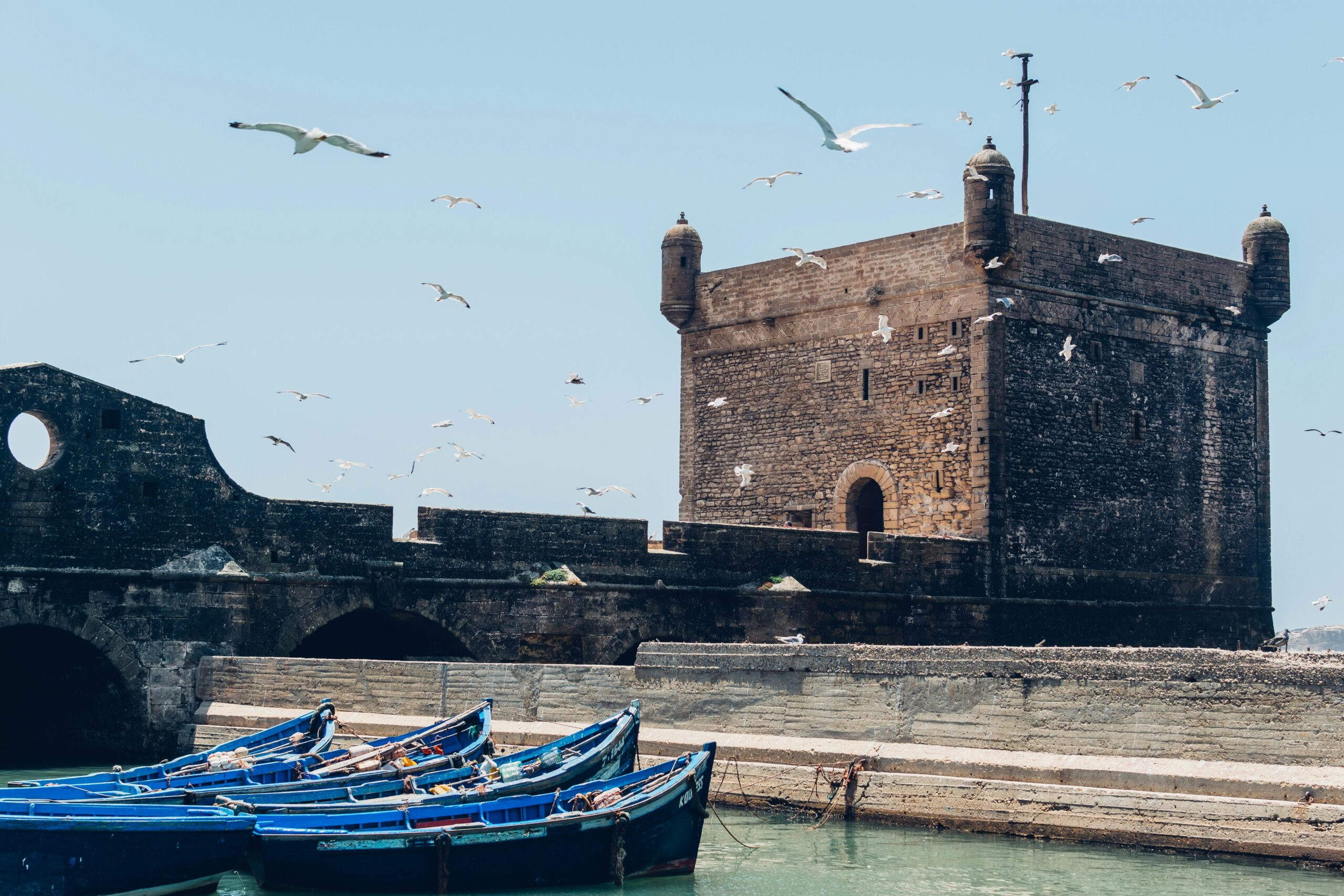
Just 2.5 hours west of Marrakech Morocco lies Essaouira, one of the most distinctive cities on Morocco's Atlantic coast. A UNESCO-listed medina, a working fishing harbour, ocean-facing fortifications swept by trade winds, and a Gnawa music scene of international renown — Essaouira offers a completely different rhythm from Marrakech's intense urban energy. The light here is crisp and coastal, the pace unhurried, the colours an arresting combination of blue, white, and ochre against the grey Atlantic.
Essaouira is the ideal day trip or overnight extension when you fly to Marrakech Morocco and want to experience a genuine contrast. Browse the harbour fish market in the morning, walk the 18th-century sea walls at sunset, and eat freshly grilled sardines at a port-side table. Many visitors find that Essaouira ends up being a highlight of their entire Morocco Marrakech itinerary.
Toubkal Trek: The Atlas Mountains Adventure from Marrakech

Ninety minutes south of Marrakech, the High Atlas Mountains rise sharply from the plain, culminating in Mount Toubkal at 4,167 metres — the highest peak in North Africa. The classic two-day trek begins in the Berber village of Imlil (1,740m), climbs through the Mizane Valley past traditional Amazigh hamlets, and reaches the Toubkal Refuge before a pre-dawn summit push on day two.
The panorama from the summit on a clear morning is one of the great rewards available to any traveller who decides to fly to Marrakech Morocco. The entire High Atlas range spreads in every direction and on exceptional days the Sahara is visible on the horizon. No technical mountaineering experience is required in summer — a good level of fitness, proper footwear, and a certified local guide are all you need.
The Atlas Mountains Trekking Experience from Imlil handles everything: transfers from Marrakech, a certified Berber guide in English and French, mule support for luggage, traditional meals, and accommodation in a mountain guesthouse or refuge. Choose from 2 to 5-day itineraries depending on your ambition and schedule.
Desert Quad and Buggy Adventure near Marrakech

For those who want a rush of adrenaline alongside culture and history, a quad bike or buggy adventure in the desert landscapes south of Marrakech is an unmissable half-day excursion. Just 20 minutes from the medina, the terrain opens into dusty red trails, ancient palm groves, and traditional Berber villages — a raw, open side of Morocco Marrakech that most visitors on foot never reach.
Routes pass through the famous Palmeraie palm grove, wind across open desert tracks, and typically include a traditional mint tea stop at a local farm. The experience suits complete beginners and experienced riders alike, with guides accompanying every group throughout. It is one of the best ways to break up a city-focused itinerary and understand the dramatic desert landscape that surrounds Marrakech Morocco on all sides.
Build your complete Morocco adventure. Beyond Morocco Travel combines the best of Marrakech city, Atlas mountain trekking, Atlantic coast visits, and desert experiences into tailored itineraries. Explore our experiences and plan the trip that suits you perfectly.
Essential Tips Before You Fly to Marrakech Morocco
- Currency: The Moroccan Dirham (MAD) is not freely convertible abroad. Exchange money at the airport or a bank on arrival. ATMs are widely available in Guéliz and around the medina.
- Dress respectfully: Marrakech is a Muslim city. Covered shoulders and knees are appreciated in the souks, near mosques, and in local neighbourhoods — a small gesture that goes a long way.
- Language: Darija (Moroccan Arabic) and French are the main languages in daily life. Basic French is genuinely useful. Most riad staff, guides, and tour operators speak good English.
- Getting around: Petit taxis handle most city journeys cheaply — agree on a price before you set off or insist on the meter. The medina is best explored entirely on foot.
- Bargaining: Expected and encouraged in the souks. Start at around a third of the opening asking price. Keep it light and friendly — it is a conversation, not a confrontation.
- Food to seek out: Pastilla (sweet pigeon or chicken pastry), slow-cooked lamb tagine, msemen flatbread, and freshly squeezed orange juice at Jamaa el-Fna for just a few dirhams a glass.
Conclusion: Marrakech Morocco Will Stay with You
There is a reason millions of travellers fly to Marrakech Morocco every year — and return. The city delivers what modern travel so rarely can: total immersion in a culture with a thousand years of depth, with the mountains, the ocean, and the desert all within arm's reach. Jamaa el-Fna alive at midnight. The silence above the clouds on Toubkal. The smell of the Atlantic in Essaouira. The red dust of a desert track beneath a buggy wheel. Morocco Marrakech is not a destination you visit once and tick off a list. It is a place you keep coming back to.
The best time? March or November, when the weather in Morocco Marrakech is at its most agreeable and the city feels most genuinely itself. But whenever you can make the trip is the right time. Book your flight, choose your riad, and let Marrakech Morocco take care of the rest.
Weather data is indicative and based on historical averages. Always verify current entry requirements and travel conditions before your trip to Marrakech Morocco.


